- (647) 969-3759
- Monday - Sunday
- 8AM - 6 PM
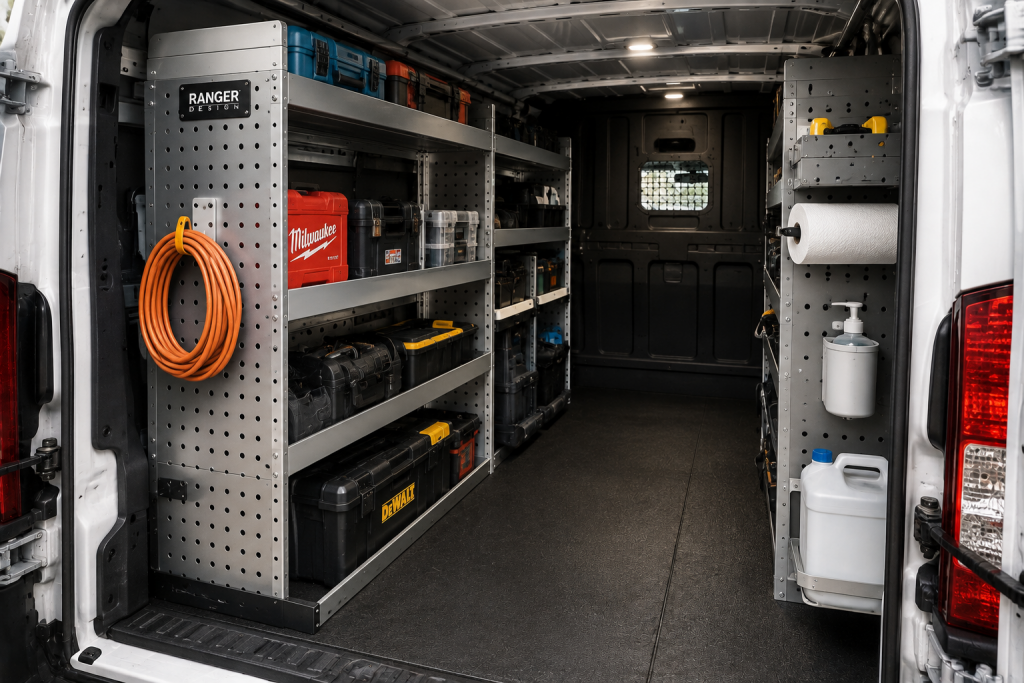
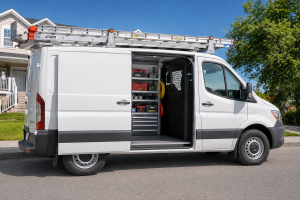
Canadian Van Outfitters builds Dodge ProMaster van shelving systems for contractors and service fleets who need every cubic foot of cargo space to earn its keep. A ProMaster’s tall, square cargo box is a strength, but only if the shelving inside it matches how a crew actually works. Choosing the wrong configuration wastes headroom, blocks the side door, or leaves tools sliding around on every turn.
This guide walks through how to match Dodge ProMaster van shelving to a real trade workflow, not just a catalog photo. We’ll cover materials, layout choices, roof and floor considerations, and the small details that determine whether a shelving system holds up after a few thousand kilometres of job sites.
Unlike a Ford Transit or Mercedes Sprinter, the ProMaster’s front-wheel-drive layout gives it a flat load floor and boxier walls. That extra usable width means Dodge ProMaster van shelving can run deeper without eating into the centre aisle, which matters if a technician needs to walk to the back doors without climbing over totes.
The tradeoff is that ProMaster interiors vary more than owners expect between trim years, so a shelving unit sized for one model year can sit slightly off in another. Confirming interior dimensions against the shelving unit’s spec sheet before ordering avoids a return trip and gets the shelving flush against the wall on the first try.
Cargo van buyers often assume every ProMaster body length shares the same interior width, but Ram offers several roof and length combinations, and each one changes how far a shelving run can extend before it crowds the rear doors. A quick measurement against the actual van, rather than a general spec sheet, is the safest starting point.
An electrician, a plumber, and an HVAC technician load a van in three completely different ways, and this shelving should reflect that. Electricians typically want narrow, deep bins for wire spools and small parts, while plumbers need taller open shelves for pipe and fittings that don’t fit a drawer.
HVAC and refrigeration techs, meanwhile, often carry heavier compressors and tank equipment that need reinforced lower shelves rather than a lightweight top-heavy tower. The table below breaks down common shelving configurations and where each one earns its space inside a ProMaster.
| Shelving Configuration | Best Use | Key Benefit |
|---|---|---|
| Space-saver shelving unit | Solo operators, smaller ProMaster body | Keeps a full walk-through aisle open |
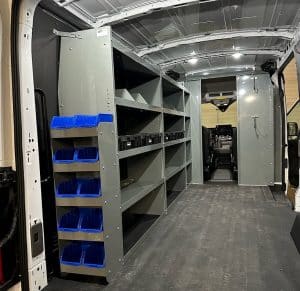
| Full shelving unit with door kit | Multi-tool trades (electrical, plumbing) | Keeps small parts contained on rough roads |
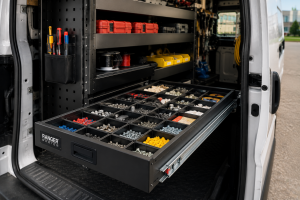
| Drawer and shelf combination | Techs carrying fasteners and consumables | Fast visual inventory of small parts |
| Open shelf tower | Ladder, conduit, or pipe storage | Handles long, awkward items easily |
Steel shelving generally handles heavier, denser loads like plumbing fixtures or power tools without flexing under weight. It’s a solid choice for trades that load the van heavily every day and don’t mind the small weight penalty compared to aluminum.
Aluminum shelving is noticeably lighter, which helps preserve payload capacity and can make a difference over the life of a fleet vehicle in fuel use. It also resists rust better in coastal or heavily salted winter regions, an important factor for any shelving system on a ProMaster running Ontario winters year after year.
Some trades split the difference, using aluminum for upper shelves that carry lighter items and steel for lower shelves that take the heaviest tools. This layered approach keeps the centre of gravity low while still saving weight where it matters most.
A shelving unit is only as strong as its mounting points. Factory floor anchor points on the ProMaster are rated for cargo loads, but adding a floor liner or deck plate first protects both the shelving base and the van’s original floor pan.
Cross-bracing between shelving columns keeps the whole unit rigid during hard braking or highway merges, which is where poorly mounted shelving tends to shift or squeak. A few extra bolts at install time save a lot of rattling later, and they keep loose fasteners from working their way out over thousands of kilometres.
Tradespeople often order the tallest, deepest shelving that fits the roof height, without accounting for how much of that space they’ll actually use daily. Overbuilding a shelving system this way adds weight and reduces the open floor area needed to load larger materials or equipment.
A few habits worth avoiding:
Before finalizing a shelving order, it’s worth cross-checking interior dimensions against the manufacturer’s own published specifications for your specific ProMaster body length and roof height. Ram’s official ProMaster cargo van page lists interior height and width figures by configuration, which helps confirm a shelving unit will clear the roof and side panels before it arrives.
Shelving only pays off if the layout stays consistent. Labeling shelf zones by task or trade category (fasteners, electrical, plumbing) means every technician on a fleet can find the same part in the same spot, which matters more as a company adds vans and drivers.
According to industry estimates from commercial fleet organizations, poor in-van organization is a recurring driver of lost technician time on multi-stop days, since crews spend extra minutes searching for tools that should be a reach away. A defined Dodge ProMaster van shelving layout, reviewed every few months, keeps that time loss from creeping back in.
Will Dodge ProMaster van shelving fit a high-roof or low-roof cargo van?
Most units are built around the ProMaster’s wide, boxy cargo area, but roof height still changes how tall a tower or shelf run can go. Measure your interior height before ordering so the unit clears the roof panel and any interior lighting.
Can I install this shelving myself?
Many owner-operators install a base shelving unit in an afternoon using the factory floor mounting points, though a second set of hands makes lifting and leveling easier. If your ProMaster has a finished floor or added flooring, plan the anchor points before you begin.
Does adding shelving reduce how much I can carry in a Dodge ProMaster?
Shelving takes up some payload capacity and interior volume, so it’s worth checking your van’s gross vehicle weight rating against the shelving unit’s weight plus your typical tool and material load. A well-planned layout usually more than makes up for it in daily efficiency.
What’s the difference between steel and aluminum shelving for a ProMaster?
Steel shelving tends to hold more weight per shelf and suits heavier tools, while aluminum shelving is lighter and resists corrosion better in wet climates. The right call depends on your trade, typical load weight, and how often the van sits outdoors.
How long does this shelving typically last?
A well-mounted aluminum or steel shelving unit can last many years of daily use when it’s anchored properly and not regularly overloaded. Periodic checks of the mounting bolts and shelf brackets catch wear before it turns into a bigger repair.
Canadian Van Outfitters serves fleets and tradespeople from our Concord location at 124 Connie Cres. Unit 6, Concord, ON L4K 1L7. Call (647) 969-3759 to talk through your van setup, and our team will walk you through options before any work begins. We’re open Monday – Sunday, 8:00 AM – 5:00 PM.