- (647) 969-3759
- Monday - Sunday
- 8AM - 6 PM
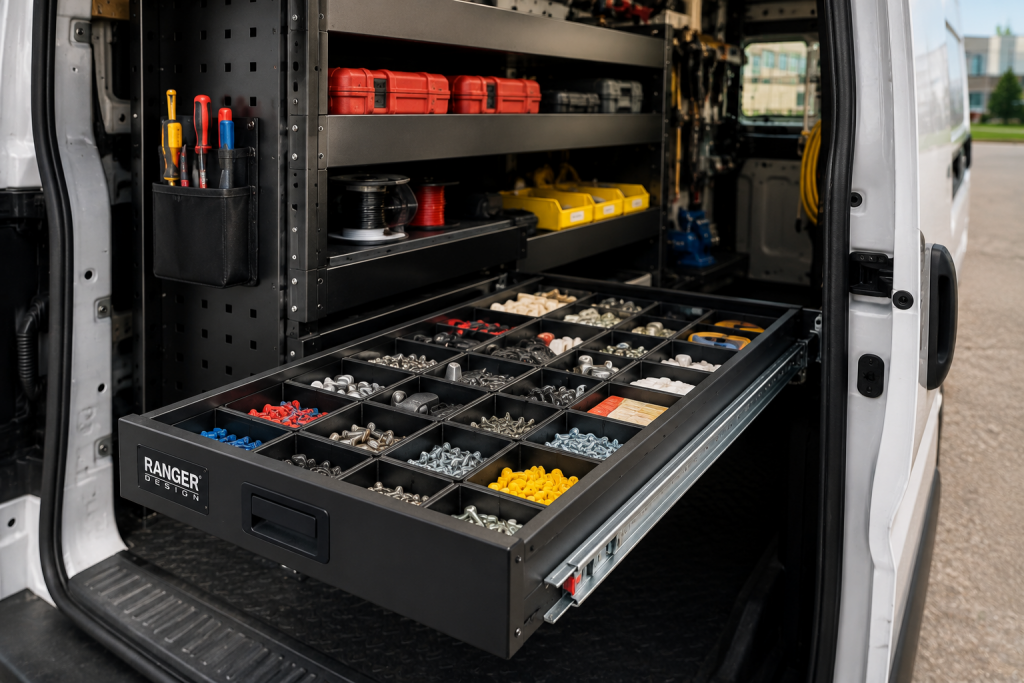
Canadian Van Outfitters outfits work vans with van drawer storage systems designed to keep small parts organized instead of rattling around loose in a tote. Fasteners, connectors, and fittings are easy to lose track of on an open shelf, and searching for them wastes real time on a job site. A dedicated drawer system solves that problem directly.
This guide covers how to choose between drawer styles, how to combine van drawer storage with existing shelving, and what to check before adding a drawer unit to a van that’s already tight on space.
Open shelving handles bulky items well, but small hardware behaves differently. A handful of loose screws or connectors on an open shelf shifts every time the van turns, ending up scattered across the cargo floor by the end of a route.
A dedicated system solves this by giving small parts a fixed compartment that stays closed during transit. A technician can open a single drawer, grab exactly what’s needed, and close it again without digging through a bin or unpacking a toolbox at the curb.
Beyond convenience, keeping fasteners and connectors contained also protects them from moisture and road grime that settles into an open shelf over time, which matters for parts sensitive to corrosion. A closed drawer also keeps small items from becoming a hazard underfoot if they spill onto the cargo floor during a hard stop.
Different trades carry different small parts, so drawer configurations vary quite a bit. The table below compares common options for van drawer storage.
| Drawer Style | Best Use | Benefit |
|---|---|---|
| 9-drawer storage unit | General fasteners, tools, small parts | Balanced capacity without dominating floor space |
| 18-bin drawer cabinet | HVAC, electrical connectors, plumbing fittings | Fine-grained sorting for very small items |
| Single drawer add-on | Vans with limited remaining space | Adds targeted storage without a full unit |
| Combined drawer and shelf tower | Multi-trade or generalist vans | One footprint covers both small and bulky items |
A drawer unit doesn’t need to replace shelving already installed in a van. Many crews mount a drawer cabinet at waist height for easy access, with open shelving above for larger tools and below for bins or bulk materials.
This layered approach keeps the most frequently used small parts within easy reach while still using the van’s full height for larger equipment. Planning this layout before installation avoids reworking mounting points later, and it keeps the drawer fronts clear of anything that would block them from opening fully.
Some crews also add a slim drawer unit along a side wall, opposite the main shelving run, to keep the centre aisle completely clear for walking between the front seats and rear doors. This works especially well in vans that already run tight on floor space.
Drawer units concentrate weight in a smaller footprint than open shelving, which means the mounting points carry more load per square foot of floor space. Anchoring into the van’s structural floor points, rather than trim panels alone, keeps a loaded drawer cabinet secure under braking.
A few things worth checking before installation:
Cargo carried inside a work van, including anything stored in van drawer storage, is subject to the same general load securement principles that apply to any commercial vehicle. Transport Canada’s road transportation guidance outlines the broader safety framework around secured cargo, which is a useful reference when deciding how heavily to load a drawer system before a long highway run.
Keeping a drawer unit within its rated capacity, rather than stacking extra weight into an already-full drawer, keeps that margin intact. Distributing weight evenly across drawers, rather than loading the heaviest items into a single compartment, also helps the unit slide and lock smoothly over time.
A drawer system only stays useful if it’s maintained. Labeling each drawer by part type, and doing a quick restock check between jobs, keeps technicians from guessing which drawer holds what.
According to industry estimates on commercial vehicle organization, fleets that standardize storage layouts across vehicles see fewer delays from missing parts, since any technician can step into any van and know exactly where to look. That consistency becomes more valuable as a fleet grows past a single vehicle, and it makes onboarding a new driver considerably faster.
A brief walkthrough with a new hire, pointing out which drawer holds which category of part, usually replaces what would otherwise take weeks of trial and error on the road. Pairing that walkthrough with a simple printed or laminated drawer map taped inside the van door keeps the whole system consistent even after staff turnover or a busy hiring season.
How is van drawer storage different from open shelving?
Open shelving works well for larger items like tool cases or pipe, while a drawer system is built for smaller, loose parts such as fasteners, connectors, and fittings that would otherwise slide around on a shelf. Drawers keep those parts sorted and visible without needing separate bins.
Can drawer units be combined with shelving in the same van?
Yes, most vans pair a drawer unit with open shelving above or beside it, using drawers for small parts and shelving for bulkier tools or materials. This combination covers both storage needs without dedicating the whole van to one system.
What’s the benefit of a bin-style drawer cabinet over standard drawers?
A bin-style cabinet, like an 18-bin unit, divides storage into small fixed compartments ideal for screws, connectors, and other tiny parts that need to stay separated. Standard drawers offer more flexible space for slightly larger items like tools or bundled cable.
Do drawer units need to be secured differently than shelving?
Drawer units carry concentrated weight low in the van, so mounting points need to handle that load without shifting during hard stops. Using the manufacturer’s recommended floor anchoring keeps a loaded drawer unit from becoming a hazard.
How do I decide how many drawers I actually need?
A quick inventory of the small parts a technician restocks most often is the best starting point, since it’s easier to size a drawer unit around real usage than to guess. Many trades start with a 9-drawer unit and add a bin cabinet later once they see which parts run out fastest.
Canadian Van Outfitters serves fleets and tradespeople from our Concord location at 124 Connie Cres. Unit 6, Concord, ON L4K 1L7. Call (647) 969-3759 to talk through your van setup, and our team will walk you through options before any work begins. We’re open Monday – Sunday, 8:00 AM – 5:00 PM.