- (647) 969-3759
- Monday - Sunday
- 8AM - 6 PM
If you open your van doors every morning and dig through a pile of parts to find one tool, something needs to change. Your van is your mobile office. The way you organize it directly affects how fast you work and how much money you make each day.
Choosing the right van shelving systems is not just about tidiness. Specifically, it is about matching your storage layout to the tools and materials your trade actually demands.
Why Trade Type Matters More Than Van Model
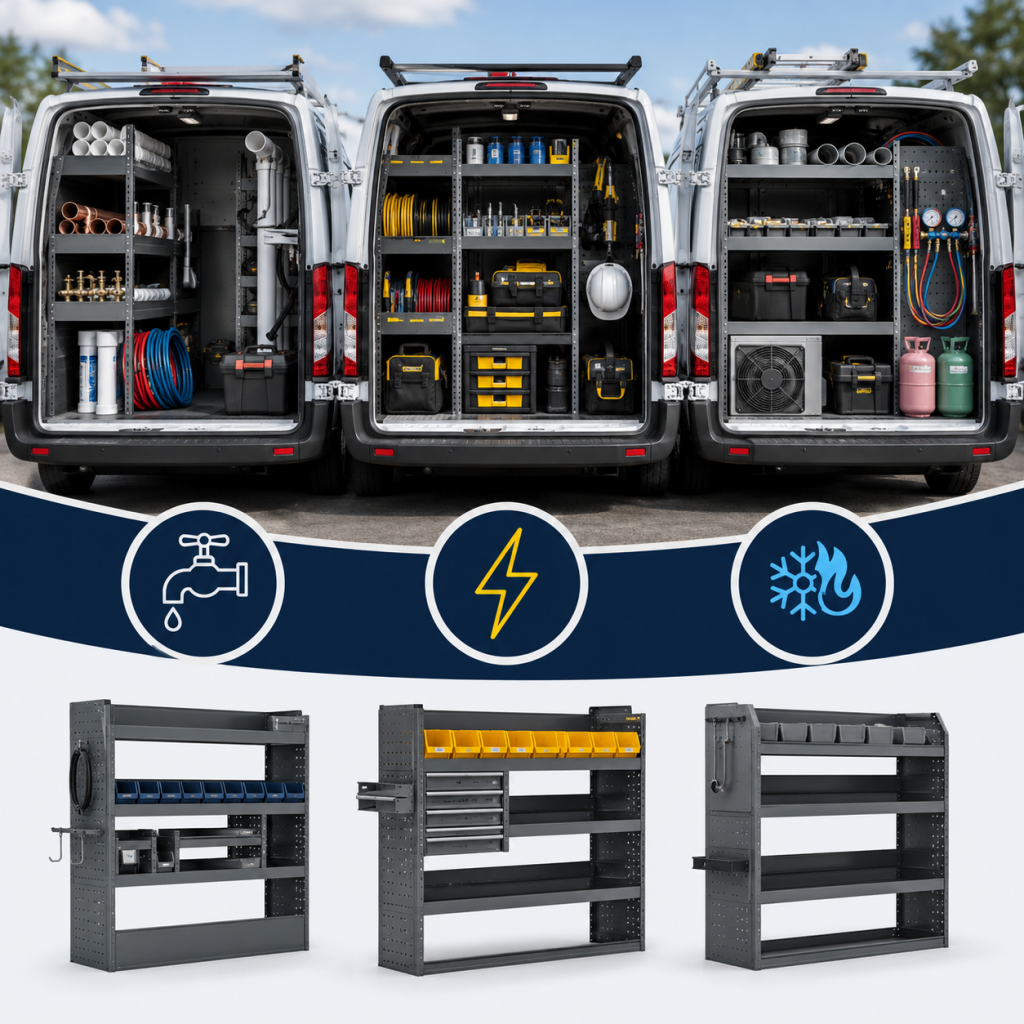
Most tradespeople start shopping by van brand. However, the smarter starting point is your trade. An electrician carries wire spools, conduit, breaker boxes, and small parts bins. A plumber hauls pipe fittings, flexible hoses, and heavy valves. Consequently, their shelving needs look completely different.
For example, electricians benefit from tall vertical shelving with narrow compartments. Small bins and dividers keep parts sorted and accessible. Plumbers, on the other hand, need deep horizontal shelves and open floor space for longer pipe sections.
HVAC technicians often carry the heaviest equipment. Therefore, they need reinforced shelving that handles substantial weight without flexing. Consider load ratings before you buy anything.
Aluminum vs Steel Shelving: What Should You Pick?
Material choice affects weight, durability, and cost. Aluminum shelving runs lighter, which reduces fuel consumption over thousands of kilometres. Furthermore, aluminum resists rust, making it a strong choice for tradespeople who work in wet conditions or drive through rainy summer days in Alberta.
Steel shelving carries more load and often costs less upfront. However, it adds weight to your van. Over time, that extra weight increases your fuel bill. Consider your typical cargo weight before you commit to steel.
Canadian Van Outfitters stocks both options in multiple configurations. Additionally, they offer units designed specifically for van models like the Ford Transit, Mercedes Sprinter, Dodge ProMaster, and Nissan NV, so you get a proper fit rather than a generic shelf that rattles and shifts.
Shelf Configuration: Fixed vs Modular
Fixed shelving suits tradespeople with a consistent kit. If you always carry the same tools and supplies, a fixed layout saves space and feels permanent. Modular systems work better when your kit changes with each job type or season.
Think about your busiest days. Specifically, ask yourself how often your cargo changes. If the answer is “rarely,” go fixed. If the answer is “constantly,” modular gives you flexibility.
Don’t Overlook Vertical Space
Many trades waste the upper half of their van. Tall shelving towers make use of roof height and free up floor space for bulky items. Furthermore, you keep frequently used items at eye level, which cuts down on crouching and searching.
Pair your shelving with a quality van partition to separate the cab from your cargo area. This improves safety and keeps your cab clean, especially on long drives between job sites.
Measure First, Buy Second
This sounds obvious. Yet, many tradespeople skip measuring and order shelving that does not fit their van properly. Measure the interior length, width, and height of your cargo area before browsing any product page.
Consider how much floor space you need for awkward items like toolboxes or equipment cases. In addition, check whether your van has wheel wells that cut into usable shelf depth.
Canadian Van Outfitters provides shelving sized for specific van models. Therefore, you can shop by vehicle rather than guessing at dimensions.
Accessories That Maximize Your Shelving Investment
Good shelving works even better with the right add-ons. Hooks, bins, and drawer units extend what your shelves can do. Browse van accessories to find items that complement your layout.
For tradespeople who carry long materials, ladder racks work alongside shelving to move large items outside the cargo area entirely. This frees up interior space for smaller, more frequently accessed tools.
Furthermore, window screens protect your cargo and your cab from smash-and-grab theft when you park on job sites. They work well as part of a complete van setup rather than an afterthought.
Make the Right Call Before You Buy
The best van shelving for your trade is the one that matches how you actually work. Think about your tools, your typical daily load, your van model, and your budget. Specifically, avoid buying based on price alone — cheap shelving that flexes or falls apart costs more in the long run.
Canadian Van Outfitters builds and distributes shelving designed for Canadian tradespeople. Consequently, their products account for real working conditions, not just warehouse demos.
Frequently Asked Questions
What is the best van shelving material for tradespeople? Aluminum shelving works best for most tradespeople because it is lightweight, rust-resistant, and durable over long-term daily use. Steel shelving suits heavier loads but adds weight. Choose based on your average cargo weight and the conditions you work in regularly.
Can I install van shelving myself? Yes, most van shelving systems come with hardware and instructions for DIY installation. However, professional installation ensures a secure, rattle-free fit. If you are not confident with tools, getting help is worth the extra cost for long-term reliability.
How much does van shelving cost in Canada? Prices vary by size, material, and van model. Basic units start around $500–$600. Larger or model-specific configurations with door kits can reach $800–$900. Investing in quality shelving pays off through time savings and reduced tool damage over your van’s lifespan.
Will shelving void my van’s warranty? Most properly installed aftermarket shelving does not void a vehicle warranty. However, check your manufacturer’s documentation. Using bolt-free or van-specific mounting systems reduces the risk of any warranty complications significantly.
How do I choose shelving that fits my specific van model? Shop by van model rather than by generic size. Canadian Van Outfitters stocks shelving designed for specific models including the Ford Transit, Dodge ProMaster, Mercedes Sprinter, and Nissan NV. This approach guarantees a proper fit and avoids costly returns.