- (647) 969-3759
- Monday - Sunday
- 8AM - 6 PM
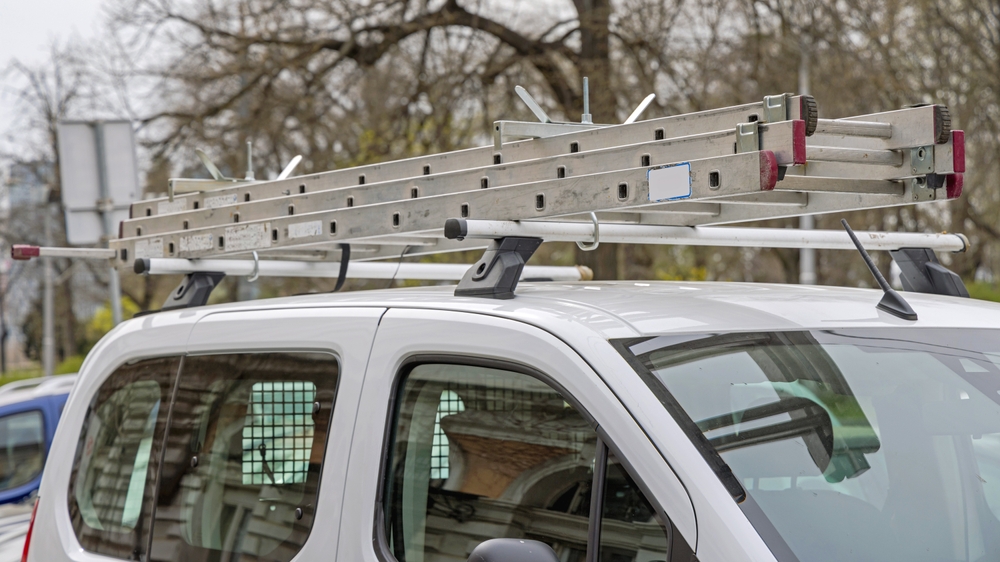
Canadian Van Outfitters sees ladder rack crossbar spacing cause more roof-top headaches than almost any other setup detail. When the bars sit too close together, a long ladder twists and chatters on every bump. When they sit too far apart, the ladder sags or the rack flexes under load. This guide explains how bar placement affects stability, what the numbers usually look like, and how to check your own van before the next job. You will also find a quick diagnostic table and a checklist you can run in ten minutes.
A ladder is a long, flexible beam. Every crossbar acts as a support point, and the distance between those points decides how the load behaves on the road. Wide gaps let the ladder bounce. Tight gaps concentrate stress in one small area of the roof.
Spacing also affects how well tie-down straps and locks grip the load. A strap that sits directly over a bar pulls the ladder against solid support. A strap placed halfway between bars pulls the ladder down into the gap, which loosens it over time.
Wind lift and vibration grow quickly as speed rises. Ladders that feel fine around town often hum or shift on the highway. Good spacing spreads the load across the bars so no single point takes the full force of a gust or a hard stop.
Poor spacing also damages gear. Rails rub against bar edges, paint wears through, and fiberglass develops stress marks. Even spacing keeps contact points consistent, which protects both the ladder and the roof.
Most rack systems use two, three, or four bars. Each layout suits a different mix of ladder lengths and roof sizes. Your van type, roof height, and the longest ladder you carry should drive the choice.
| Layout | Best suited for | Main strength | Watch out for |
|---|---|---|---|
| 2 bars | Short stepladders, light loads | Simple and light | Long ladders can flex between bars |
| 3 bars | Mixed ladders and pipe | Balanced support | Needs correct center placement |
| 4 bars | Long extension ladders, heavy loads | Maximum support | More hardware to maintain |
Our catalogue includes a 2-bar aluminum utility rack and a 3-bar aluminum utility rack for different van lengths. The right one depends on what you carry most often.
There is no single universal number. Industry guidance suggests supporting a ladder at roughly one third and two thirds of its length for stable carrying, though the exact figure depends on the rack and the roof. Treat that as a starting point, not a rule.
Start with the ladder you carry most often, not the one you carry once a year. Lay it on the roof, or measure it on the ground, and mark the support points that keep it level. Then compare those marks with your current bar positions.
Bars should land on strong mounting points, not on thin or flexible panels. Roof height matters too, since high-roof and low-roof vans have different rib patterns. Our guide to choosing racks for high-roof versus low-roof vans covers those differences in detail.
Allow clear space around each bar for locking hardware and straps. A lock that fouls the ladder rail will not seat properly. Plan access so you can load and secure the ladder without climbing onto the bumper.
Your van usually tells you when the bars are in the wrong place. Listen for noise, watch for movement, and inspect the contact points after a week of normal driving.
| Symptom | Likely cause | What to do |
|---|---|---|
| Ladder hums on the highway | Gap between bars too wide | Add or reposition a bar |
| Ladder rocks side to side | Bars too close together | Spread the bars toward the ends |
| Rail marks in one spot only | Load sits on a single bar | Rebalance the ladder position |
| Strap loosens after a day | Strap sits between bars | Move strap over a bar |
| Bars flex visibly | Span too long for the load | Use a heavier rack or extra bar |
Most of these problems appear within the first few trips. Fixing them early prevents rail damage and keeps your load secure. Good ladder rack crossbar spacing also makes loading easier, because the ladder settles into the same position every time. Crews that standardize their setup report fewer surprises and faster departures from the yard.
Run through this list whenever you install a rack or change the ladders you carry.
Write the date of each check on a card in the glove box. Regular checks catch loose hardware before it becomes a roadside problem. If you change ladders often, revisit your ladder rack crossbar spacing each time, since a shorter or longer ladder shifts the ideal support points.
Extension ladders, step ladders, and platform ladders all rest differently. Extension ladders are long and slim, so they need wide support. Step ladders are shorter and heavier, so they benefit from a bar near each end. Mixed loads usually call for a three-bar layout that covers both.
Pipe, conduit, and lumber add their own demands. These loads flex more than a ladder and may need an extra strap per bar. Place the stiffest item on the bottom and the lightest on top, then secure the stack as one unit.
Correct spacing is only part of safe ladder transport. Secure ladders so they cannot slide forward in a hard stop. Lock the rack when you leave the van, because an unlocked ladder invites theft. For more on tie-down methods, see our walkthrough on the easiest way to transport ladders safely.
Workplace safety bodies publish plain-language advice on ladder handling and lifting. The Canadian Centre for Occupational Health and Safety offers a library of workplace safety answers that is worth bookmarking for your crew. Pair it with a regular rack inspection, and you cover both the load and the person lifting it.
Some vans have unusual roofs, tall equipment, or mixed loads that make the standard layout awkward. If you are unsure, send us your van make, roof height, and longest ladder. We will suggest a bar layout that fits. We give an honest quote after we understand the setup, never before.
Is there a standard distance between ladder rack crossbars?
No single distance fits every van. The right figure depends on roof length, rack design, and the longest ladder you carry. A common starting point is supporting the ladder near one third and two thirds of its length.
Can I move my crossbars myself?
Many racks allow adjustment along the mounting channels. Always follow the manufacturer’s instructions and tighten every fastener. If your rack bolts directly to the roof, ask a professional before changing anything.
Do I need a third bar for a single extension ladder?
Not always. Two well-placed bars can carry one ladder. A third bar helps when you carry several ladders, long pipe, or heavy gear that could flex the span.
Why does my ladder still rattle with good spacing?
Check the straps, rail pads, and lock hardware. Worn pads and loose fasteners cause most remaining noise. Replace worn parts and retighten the system.
Questions about rack layouts or fitment? Call us at (647) 969-3759 or visit our office at 124 Connie Cres. Unit 6, Concord, ON L4K 1L7. We are open Monday to Sunday, 8 AM to 6 PM.