- (647) 969-3759
- Monday - Sunday
- 8AM - 6 PM
Canadian Van Outfitters installs van ventilation systems for crews who load their cargo area with fuel-powered tools, chemicals, or materials that don’t handle trapped heat and moisture well. A closed van heats up fast in direct sun and holds onto fumes long after a tool shuts off. Left unaddressed, that trapped air damages equipment and makes the back of the van an unpleasant place to work.
This guide explains what a van ventilation system does, when a trade actually needs one, and what to consider before adding one to an existing setup.
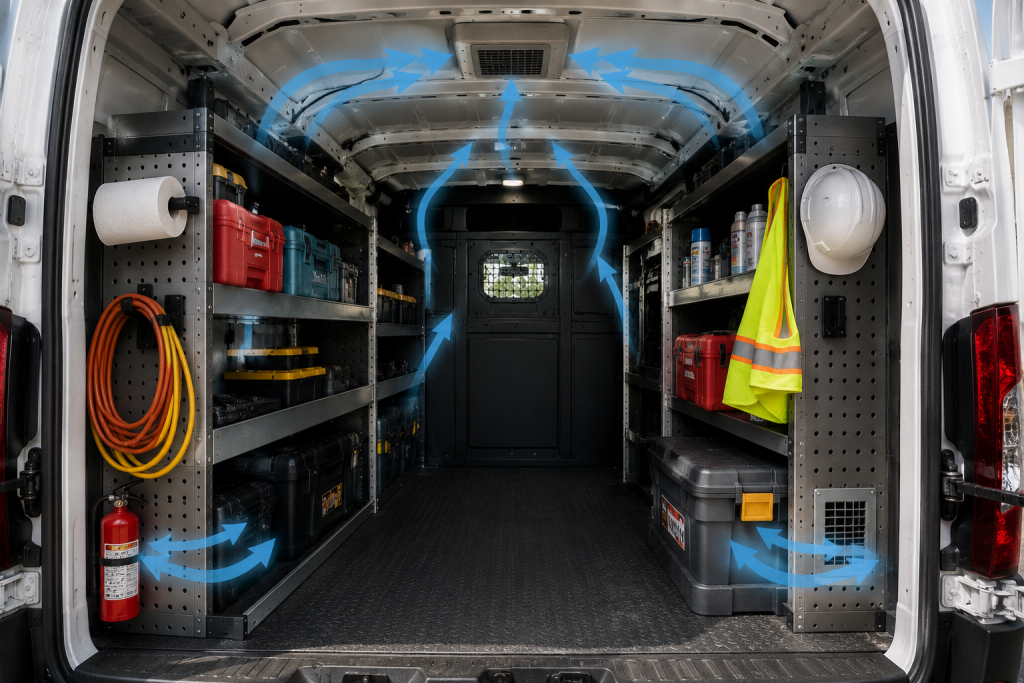
A system like this pulls stale, hot, or fume-heavy air out of the cargo area and replaces it with fresh outside air, usually through a roof or wall-mounted vent with a fan. Unlike simply cracking a window, it works while the van is parked and sealed, which matters for vans that sit closed between job stops.
This constant air exchange reduces the buildup of heat, moisture, and airborne particles that would otherwise settle on tools, materials, or shelving surfaces. Over a full workday, that difference shows up in how the cargo area smells and feels the moment the doors open.
A fan-driven vent also keeps air moving even when the van is parked in shade, since trapped heat and fumes don’t simply dissipate on their own without an active exchange point.
Not every van needs one, but several trades see a clear benefit. The table below outlines common cases where added airflow earns its place.
| Trade or Use Case | Ventilation Concern | Benefit of a System |
|---|---|---|
| Painters and finishers | Solvent and fume buildup | Reduces fume concentration in enclosed cargo area |
| HVAC and refrigeration techs | Refrigerant and equipment heat | Helps dissipate heat around stored equipment |
| General contractors | Dust and material off-gassing | Improves air quality for materials stored longer-term |
| Mobile mechanics | Fuel and fluid odor | Moves fumes out instead of letting them linger |
A sealed cargo van left in direct sun can reach temperatures well above the outside air, and that heat doesn’t just affect comfort. Battery-powered tools, adhesives, and certain materials have manufacturer-recommended storage temperature ranges, and a hot van interior can push past them regularly during summer months.
Moisture is the other half of the problem. Overnight temperature drops cause condensation on interior metal surfaces, which over time contributes to rust on shelving, fasteners, and tool surfaces. A van ventilation system reduces that condensation cycle by keeping air moving instead of letting it sit still.
This matters most for vans that carry porous materials such as drywall, insulation, or fabric-covered goods, since trapped moisture can seep into those materials in ways that aren’t obvious until later. Keeping air circulating reduces how much moisture those materials absorb while stored inside the van.
Adding a ventilation system to a van that already has shelving, a partition, or drawer storage installed takes some planning. Vent placement needs to avoid blocking airflow with a tall shelving tower or partition wall, since that defeats the purpose of the system.
A few things to check before installation:
Working with an installer familiar with a specific van’s electrical and roof layout helps avoid these conflicts altogether, since they can point out clearance issues before a vent is cut into the roof panel.
Managing airborne fumes and dust inside an enclosed workspace is a recognized part of workplace safety planning. CCOHS ventilation guidance explains how proper air exchange reduces exposure to contaminants in enclosed spaces, a principle that extends directly to a sealed cargo van interior where fumes and dust have nowhere else to go.
Applying that same thinking here means treating airflow as a functional requirement, not an optional upgrade, for any van carrying fuel-powered tools or chemical products regularly.
Ventilation works best as one piece of a broader interior setup rather than an afterthought. Pairing a van ventilation system with organized shelving and secure storage means the cargo area stays functional for both the tools inside it and the person working out of it every day.
Crews that add ventilation alongside a shelving and drawer overhaul tend to notice the combined effect fastest, since organized storage keeps materials off the floor where airflow matters most. A van set up this way stays more comfortable to work in and keeps stored equipment in better condition between jobs.
Reviewing the full interior setup once a year, rather than treating ventilation as a one-time install, helps catch new gaps as tools, materials, or storage systems change over time. A van that carries different equipment than it did a year ago may need its airflow reassessed to match, especially after a shelving or drawer upgrade changes how air moves through the cargo area.
Why does a work van need a dedicated ventilation system?
A closed cargo area traps heat, moisture, and fumes from materials, paint, or fuel-powered tools, which affects both stored equipment and anyone working in the back. A van ventilation system moves that trapped air out instead of letting it build up over a shift.
Does a ventilation system help with condensation in a van?
Yes, temperature swings between a cold morning and a warm afternoon cause condensation inside a sealed cargo area, which can lead to rust on tools and mildew on stored materials. Airflow through a properly installed system reduces how much moisture collects on interior surfaces.
Can a ventilation system be added to any van model?
Most ventilation systems are designed to fit standard cargo van roof or wall openings, but exact placement depends on the van’s structure and any existing shelving or partitions. Checking clearance around your current interior layout avoids conflicts during installation.
Does running a ventilation system affect fuel economy?
A properly installed unit draws minimal power and has no meaningful effect on fuel economy. The bigger factor is usually a driver’s habit of running the engine idle for climate control, which ventilation can help reduce.
How often should a ventilation system be inspected?
A quick visual check every few months, looking for a blocked vent, a slow fan, or a loose mounting seal, catches most issues before they become a bigger problem. Seasonal changes are a natural reminder to check that the system is still moving air properly.
Canadian Van Outfitters serves fleets and tradespeople from our Concord location at 124 Connie Cres. Unit 6, Concord, ON L4K 1L7. Call (647) 969-3759 to talk through your van setup, and our team will walk you through options before any work begins. We’re open Monday – Sunday, 8:00 AM – 5:00 PM.