- (647) 969-3759
- Monday - Sunday
- 8AM - 6 PM
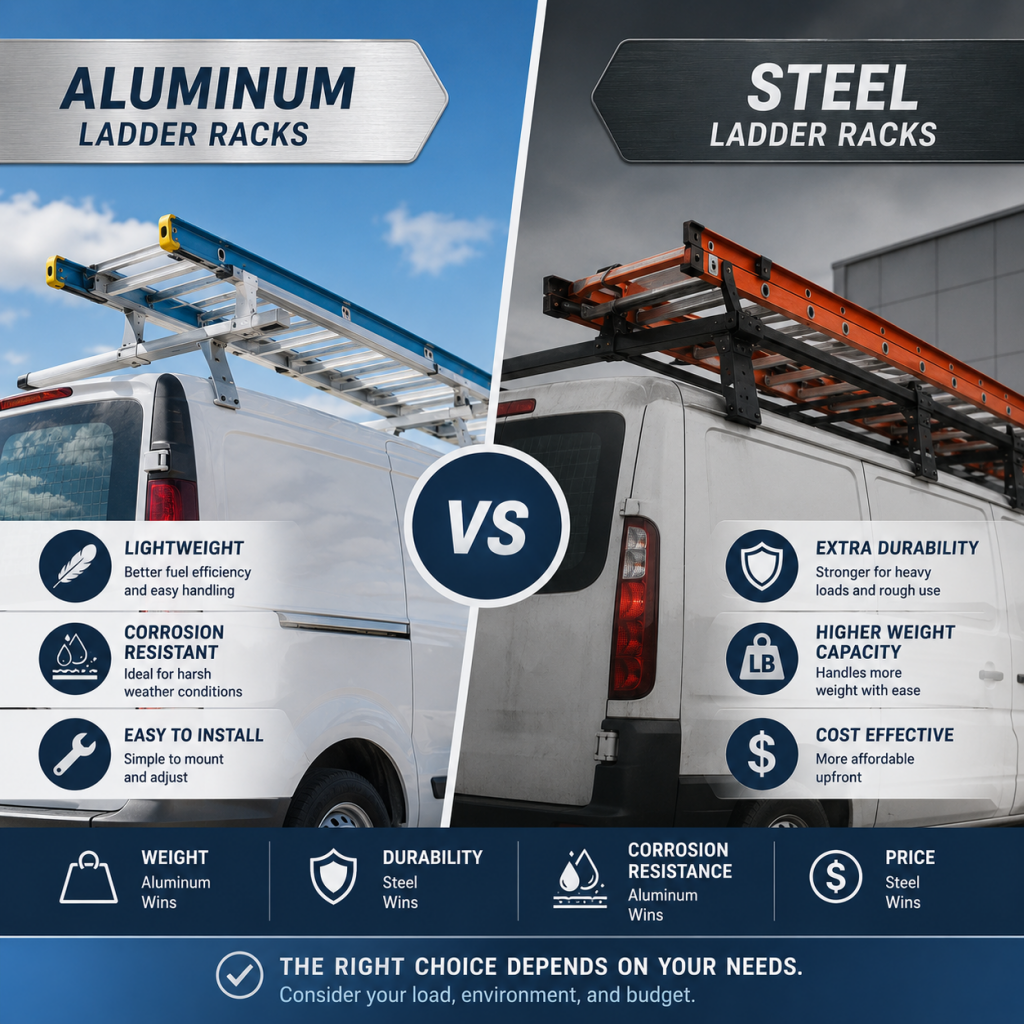
If you carry ladders on your van every day, your rack choice matters more than most tradespeople realize. The wrong rack adds unnecessary weight, wears out fast, or fails to handle your actual load. Choosing between aluminum and steel ladder racks comes down to your specific work conditions, budget, and how long you plan to keep your van.
Both materials work. However, each one suits a different kind of operator. Here is what you need to know before spending money.
The Case for Aluminum Ladder Racks
Aluminum racks run significantly lighter than steel. For a van that already carries tools, materials, and shelving, weight matters. Every extra kilogram on the roof increases fuel consumption and adds stress to your van’s suspension over time.
Furthermore, aluminum does not rust. In Alberta summers, that might seem less relevant than in coastal climates, but rain, morning dew, and road spray still affect metal surfaces. Over years of outdoor exposure, aluminum holds up without the surface degradation that untreated steel experiences.
Aluminum also tends to stay cooler to the touch in direct sunlight. Specifically, this matters when you handle the rack during a hot July afternoon on a job site. Touching a steel rack that has been baking in the sun for hours is genuinely uncomfortable.
Canadian Van Outfitters offers aluminum rack options designed for full-size vans, including the Ford Transit, GMC Savana, Mercedes Sprinter, and Chevy Express. Consequently, you get racks sized and rated for your specific vehicle rather than a universal fit that compromises load distribution.
The Case for Steel Ladder Racks
Steel racks cost less upfront in most cases. If budget is your primary concern right now, steel delivers solid performance at a lower initial price point. Additionally, steel handles impact and abrasion better than aluminum. Tradespeople who frequently load and unload heavy equipment in rough conditions often prefer steel for that durability.
Steel racks also resist deformation under extreme loads. For operators who regularly push close to their rack’s rated capacity, steel provides a margin of confidence that thinner aluminum profiles do not always match.
However, steel requires maintenance. Therefore, you need to inspect the coating or finish regularly and address rust spots before they spread. A neglected steel rack deteriorates faster than an aluminum one in outdoor conditions.
Weight Capacity: What Are You Actually Carrying?
Both materials come in options with varying load ratings. Before you compare materials, calculate your actual working load. Include the weight of your heaviest ladder, any additional materials you strap to the roof, and a safety margin above that.
Overloading a rack — regardless of material — creates a safety risk and can damage your van’s roof. In addition, overloaded racks on moving vehicles raise serious road safety concerns for everyone around you.
Check the manufacturer’s rated capacity, not just the general material category. A heavy-duty aluminum rack can outperform a light-duty steel rack in load capacity. Consequently, material alone does not determine what a rack can carry.
Pairing Your Rack with the Right Van Setup
A ladder rack works best as part of a complete van organization system. When you move ladders and long materials to the roof, you free up interior space for shelving and organized storage. Pair your rack with quality van shelving to make use of every available inch inside.
Additionally, install a van partition to protect your cab from anything that shifts in the cargo area. Long shifts and heavy drives put stress on every component, and a partition ensures your driver stays protected.
Round out your setup with practical van accessories like straps, hooks, and bins to keep smaller items organized alongside your larger rack-mounted loads.
Installation and Fit Matter as Much as Material
A well-fitted aluminum rack beats a poorly installed steel rack every time. Therefore, prioritize model-specific fit over grabbing whatever ships fastest. Racks that do not align properly with your roof rails or rain gutters create stress points that cause premature wear.
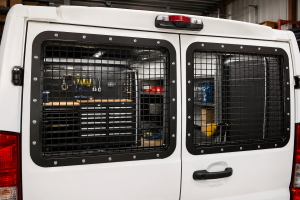
Canadian Van Outfitters builds racks for specific van models so they mount correctly and distribute load evenly. Furthermore, window screens complete a security-focused van setup by protecting against cargo shift damage and unauthorized entry from the exterior.
So, Which One Should You Buy?
For most tradespeople driving Canadian roads and managing fuel costs across long workdays, aluminum offers the better long-term value. It weighs less, resists weather, and requires minimal upkeep. However, if you carry extremely heavy loads regularly and prioritize upfront affordability, steel remains a solid choice.
Canadian Van Outfitters stocks both. Therefore, compare your specific use case before you decide. The right rack pays for itself through efficiency, fuel savings, and reduced maintenance over your van’s working life.
Frequently Asked Questions
How much weight can a typical van ladder rack hold? Load ratings vary by product and material. Most commercial ladder racks handle between 200 and 400 pounds of evenly distributed weight. Always check the specific rated capacity for the rack model you buy and stay within that limit to maintain safety and warranty coverage.
Does an aluminum ladder rack really save on fuel? Yes, meaningfully so over time. A lighter rack reduces the total vehicle weight your engine moves every kilometre. Over tens of thousands of kilometres annually, the fuel savings from choosing aluminum over steel can offset a significant portion of the rack’s purchase price.
Can I install a ladder rack on any van? Ladder racks mount to specific roof rails, rain gutters, or roof structures. Not every rack fits every van. Canadian Van Outfitters builds racks for specific van models, so you should always shop by your vehicle make and model to ensure proper fit and safe load distribution.
How do I maintain a steel ladder rack to prevent rust? Inspect your rack’s coating regularly, especially after road exposure or wet summers. Touch up any chips or scratches with rust-inhibiting paint immediately. Applying a protective wax or sealant annually extends the life of a steel rack significantly in outdoor Canadian conditions.
Is a ladder rack worth it if I only carry ladders occasionally? If you carry ladders even a few times per week, a rack pays off quickly. It protects your van’s interior, reduces cargo movement risks, and keeps ladders accessible. For occasional users, a lighter aluminum rack minimizes the weight penalty on days when you drive without a load.