- (647) 969-3759
- Monday - Sunday
- 8AM - 6 PM
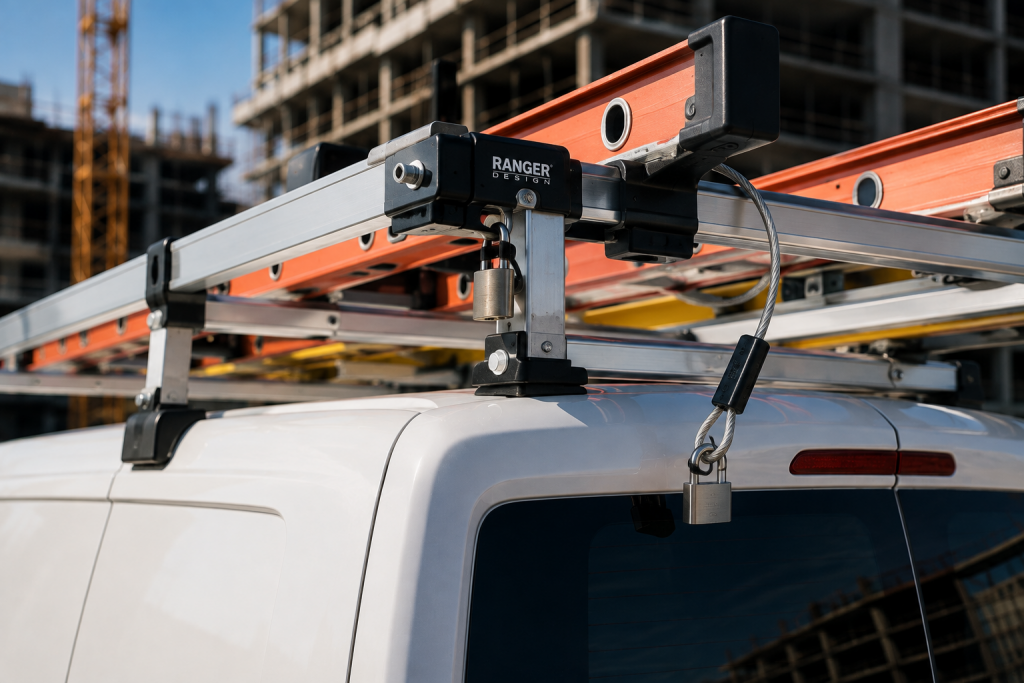
Canadian Van Outfitters fits Ontario work vans with locking ladder rack systems built for crews who need to avoid setbacks from theft or road vibration. A ladder rack that only rests a ladder in place isn’t enough protection for job sites where vans sit unattended for hours. A locking ladder rack changes that equation.
This guide explains how double-lock ladder rack systems work, when they make sense, and what to look for so the rack matches your van and your ladders. We’ll also cover a few habits that keep a locking ladder rack working properly through a full Ontario winter.
A standard ladder rack holds a ladder in place with straps, clamps, or gravity, which works fine in a locked garage but leaves a lot to chance on an open job site. A double-lock version adds a second securing point, usually a keyed or pin-style lock at both the front and rear rail.
That second lock point matters because a ladder secured at only one end can still pivot or lift under hard braking, wind, or an attempted theft. Locking both ends turns the rack into a real deterrent rather than a suggestion, and it gives a crew one less thing to check before driving off.
A growing number of fleet managers specify a locking rack as a standard line item on new van builds, treating it the same way they treat a dash cam or a GPS tracker. It’s a simple step that removes one common point of loss from daily operations.
A few warning signs point to a rack that’s due for an upgrade. If a ladder has ever shifted noticeably during a highway drive, the mounting or securing method isn’t holding under real driving conditions.
Watch for these signs on your current setup:
Not every trade needs the same rack. The table below compares common ladder rack styles by use case, so it’s easier to match a locking ladder rack to how your crew actually operates.
| Rack Style | Best Use | Benefit |
|---|---|---|
| Single-lock rack | Vans parked in a secured yard overnight | Basic theft deterrence, lower profile |
| Double-lock rack | Vans parked on open job sites or streets | Two-point security against theft and shift |
| Low-profile rack | High-roof vans with clearance restrictions | Keeps overall vehicle height manageable |
| Multi-bar rack (3+ bars) | Longer or heavier extension ladders | Distributes weight across more support points |
Roof height changes which rack style fits a given van without pushing total vehicle height over a garage or parkade clearance. High-roof vans in particular benefit from a low-profile locking ladder rack that keeps the ladder from adding too much to the vehicle’s overall height.
Mounting points should tie into the van’s structural roof rails rather than sheet metal alone, since a rack under load needs a solid anchor. A rack installed without proper reinforcement can work loose over time, defeating the purpose of the locking mechanism entirely and putting extra strain on the roof panel itself.
Ontario winters put road salt directly into contact with any exposed rack hardware, which is where corrosion resistance becomes as important as the locking feature itself. Aluminum racks generally outperform uncoated steel in this environment, since they resist rust without needing regular touch-up.
A locking mechanism exposed to freezing temperatures can also stiffen up if it isn’t lubricated periodically, so a quick check before winter driving season starts is worth the few minutes it takes.
Road spray and de-icing salt collect fastest around exposed bolts and hinge points, so a rack mounted with corrosion-resistant hardware from the start avoids replacing seized components partway through a winter. A five-minute rinse after a slushy week goes a long way toward keeping the lock mechanism free.
Properly securing loads during transport is not just about theft prevention. According to CCOHS occupational health and safety guidance, unsecured cargo that shifts in transit is a recognized hazard, and the same logic applies directly to a ladder mounted on an exterior rack rather than inside the cargo box.
A locking ladder rack that holds a ladder firmly at two points reduces that shifting risk on every trip, not just when the van is parked. It’s a small detail that pays off both in security and in road safety.
This rack style still needs to match the van’s roof configuration, whether that’s a factory rain gutter, a track system, or a bare roof requiring a separate mounting kit. Checking compatibility against your specific van model before ordering avoids a rack that doesn’t sit flush or lock properly.
Fleet operators running mixed van models sometimes find that one mounting kit doesn’t transfer cleanly between a high-roof and a low-roof vehicle, even from the same manufacturer. Confirming fit model-by-model, rather than assuming a single kit covers the whole fleet, saves a mismatched order later.
Upgrade Your Van With Secure Ladder Racks
Security is paramount when it comes to protecting your equipment. If you’re ready to upgrade your van with the best in tool protection, check out our selection of secure ladder racks designed with locking mechanisms to keep your valuable equipment safe on every job site.
What does ‘double lock’ mean on a ladder rack?
A double-lock design secures a ladder at two separate points along the rack instead of one, which stops the ladder from shifting side to side or lifting off during transport. Both lock points typically use a keyed or pin mechanism that a passerby can’t release by hand.
Are these racks worth it for a single-van operator?
Yes, since a stolen ladder means a delayed job and a replacement purchase, and ladders left on an open rack are an easy target in a parking lot or job site. It’s a small addition that protects a tool a trade can’t work without.
Do double-lock racks work with aluminum extension ladders?
Most double-lock aluminum racks are designed specifically for extension and step ladders, with rail spacing that matches common ladder widths. Confirm the rack’s rated ladder length and weight before loading a longer extension ladder.
How much maintenance does this kind of rack need?
A locking mechanism benefits from an occasional wipe-down and a drop of lubricant on the pin or latch, especially heading into winter when road salt and grit build up. Checking that the lock still engages fully every few months prevents it from seizing when you need it most.
Can a locking rack be moved between vans?
Some locking rack systems use universal mounting kits that transfer between compatible van models, though this depends on the roof style of each vehicle. Checking compatibility before a fleet swap avoids buying a second rack outright.
Canadian Van Outfitters serves fleets and tradespeople from our Concord location at 124 Connie Cres. Unit 6, Concord, ON L4K 1L7. Call (647) 969-3759 to talk through your van setup, and our team will walk you through options before any work begins. We’re open Monday – Sunday, 8:00 AM – 5:00 PM.