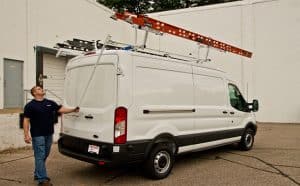
At Canadian Van Outfitters, a well-chosen van ladder rack protects your ladders, your back, and everyone sharing the road with you. Ladders are among the hardest items to haul safely. They are long, heavy, and awkward to lift overhead. A poor setup leads to strain, theft, and even dangerous road debris. This guide covers the real risks of weak ladder transport and the practical fixes that keep your gear secure. We will also compare rack styles so you can choose with confidence.
The Hidden Risks of a Poor Ladder Setup
Carrying ladders inside the cargo bay eats space and damages other gear. Strapping them loosely to a roof invites bigger problems. A ladder that works free at highway speed becomes a serious hazard. It can injure drivers behind you and expose you to liability.
Theft is the other quiet drain. Ladders left on an open roof disappear fast from busy sites. Replacing them eats into your time and lost work. A secure rack removes both risks at once. For a closer look at safe hauling, read our tips on the easiest way to transport ladders.
Choosing the Right Van Ladder Rack Style
Not every rack suits every van or trade. Your roof height, ladder count, and loading habits all shape the right choice. The table below compares common styles to help you narrow the field.
| Rack Style |
Best For |
Key Benefit |
| Fixed two-bar rack |
One or two ladders |
Simple, strong, low upkeep |
| Three-bar rack |
Multiple or long ladders |
Extra support across the span |
| Drop-down rack |
Solo loading |
Lowers ladder to waist height |
| Locking rack |
Theft-prone sites |
Double-lock security |
Match the style to how you actually work. A crew that loads alone benefits from a drop-down design. A busy urban contractor leans toward locking models.
Why Van Ladder Rack Material Matters
Rack material affects weight, rust resistance, and lifespan. Aluminum leads for most trades. It stays light, resists corrosion, and handles Canadian winters well. Steel racks add strength but demand rust protection.
If you are weighing the two, our comparison of aluminum versus steel racks lays out the trade-offs clearly. The right pick depends on your load and your climate. Most crews find aluminum delivers the best balance.
Matching the Rack to Your Roof Height
Roof height changes how you load and secure a ladder. Low-roof vans make overhead lifting easier but offer less clearance. High-roof vans demand assisted loading to avoid strain. A good van ladder rack accounts for this difference.
Measure your roof height before you buy. Confirm the rack clears garage doors and height limits. For model-specific guidance, see our notes on picking racks for different roof heights.
Safety and Proper Loading
Safe loading protects your body and your cargo. Lift with your legs, not your back, and get help with long ladders. Secure every ladder at two points to stop shifting. Check your straps before each trip.
Workplace safety bodies stress proper handling to prevent injury. The Canadian Centre for Occupational Health and Safety offers clear guidance on ladder handling and manual lifting. Following these basics keeps your crew healthy and your worksite running.
Frequently Asked Questions
Is an aluminum van ladder rack strong enough for heavy ladders?
Yes, quality aluminum racks carry standard trade ladders with room to spare. Aluminum stays light while resisting rust in wet weather. Always check the rated capacity against your heaviest ladder before loading.
How does a locking van ladder rack prevent theft?
A double-lock design secures the ladder at two points, so a thief cannot simply lift it off. This buys time and deters quick grabs at job sites. It also keeps the ladder steady while you drive.
Will roof-mounted racks hurt my fuel economy?
Any roof load adds some drag, but a well-designed low-profile rack keeps the impact small. Removing unused crossbars in the off-season helps further. The time you save loading usually outweighs the minor hit at the pump.
Can I load a ladder by myself with a drop-down rack?
Yes, drop-down and assisted racks lower the ladder to waist height for safer solo loading. This reduces strain on your back and shoulders. It is a popular upgrade for crews working alone.
Contact Canadian Van Outfitters
Ready to plan your next build? Our team is happy to help you match the right gear to your trade.
- Phone: (647) 969-3759
- Address: 124 Connie Cres. Unit 6, Concord, ON, L4K 1L7
- Hours: Monday – Sunday, 8AM – 6PM
Reach out for an honest assessment, and we will provide a clear quote after we review your needs.